
Optoelectronic and Intelligent Security International Training and Challenge Event Successfully Concluded
Release time:2026-01-09
Against the backdrop of a new wave of technological transformation and industrial upgrading, skills standards are evolving from fragmented national systems toward international collaboration. How to ensure that WorldSkills standards extend beyond competition arenas and are transformed into replicable and sustainable global skills development systems has become a key topic in international vocational education cooperation.
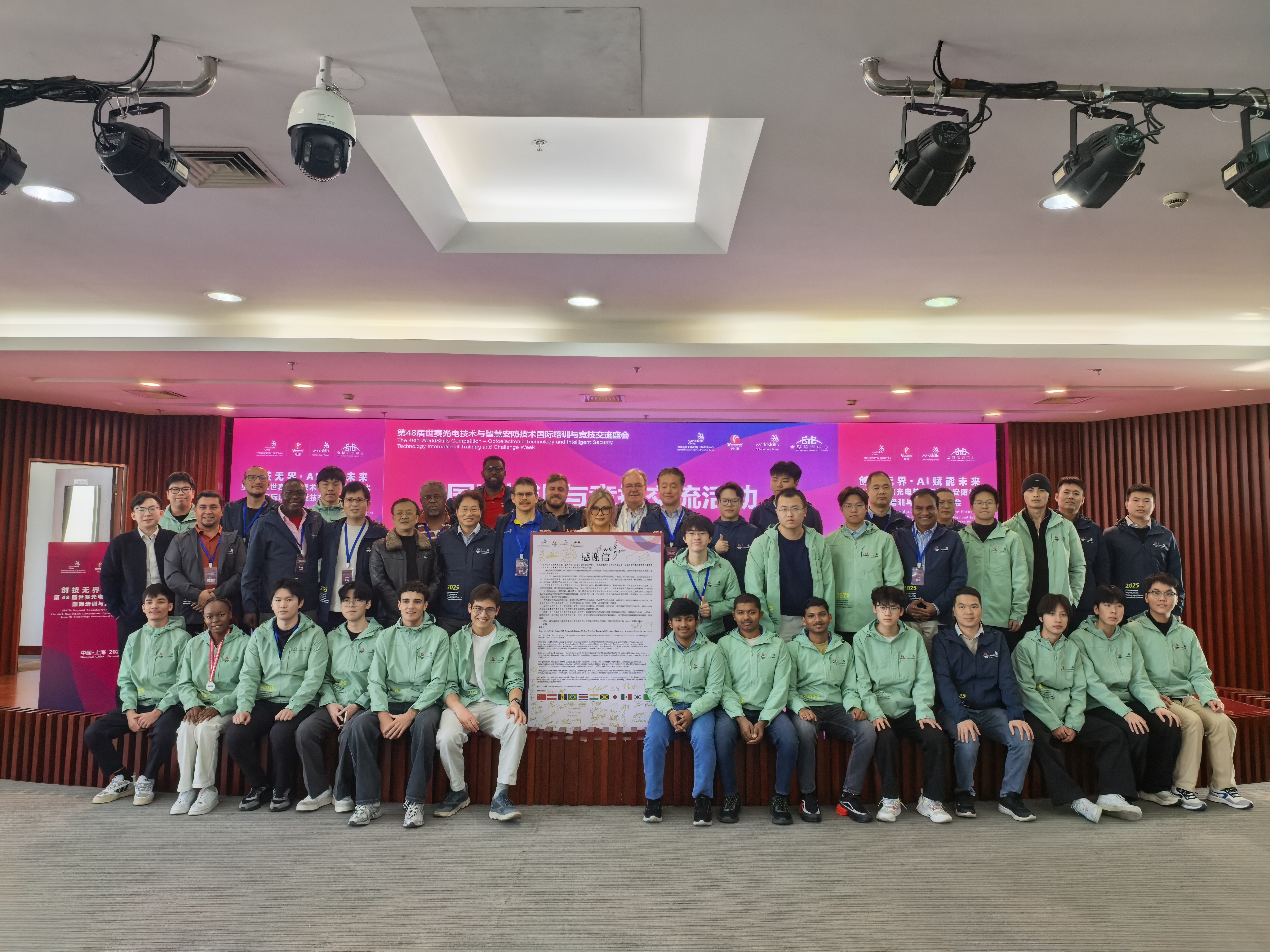
It was in this context that the 48th WorldSkills Competition - Optoelectronic Technology and Intelligent Security Technology International Training and Challenge Event was successfully held in Shanghai, China, from December 1 to December 7, 2025. Skills experts and young competitors from 11 countries and regions, including China, Austria, Jamaica, Barbados, Brazil, India, Japan, the Republic of Korea, Mexico, Zambia, and Costa Rica, gathered around the shared goal of “Skills Exchange, Standards Co-Building, and Global Collaboration,” laying an early foundation for international cooperation in preparation for the WorldSkills Shanghai 2026.
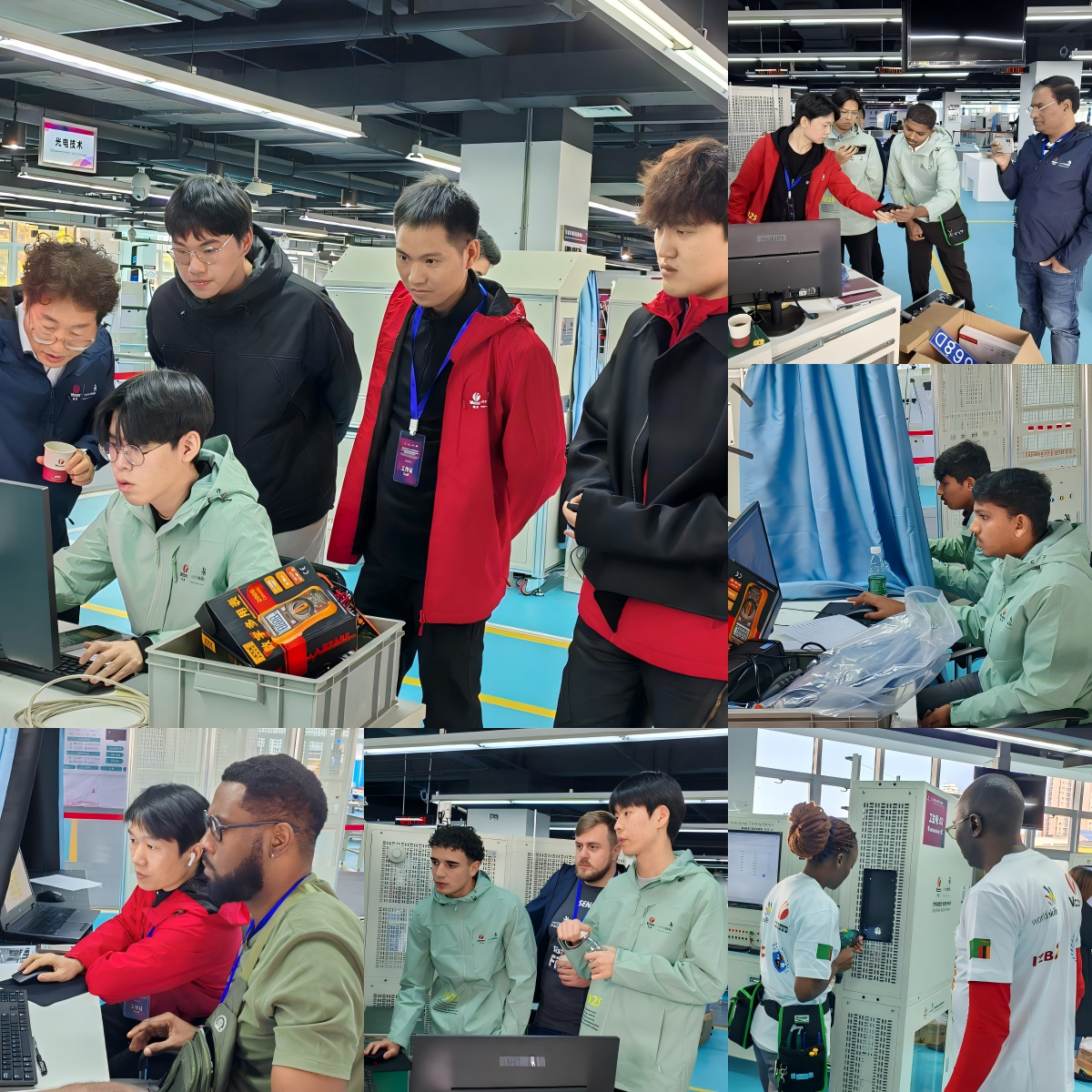
The value of this event extended far beyond a single training program or competitive exchange. Anchored in WorldSkills standards as a common professional language, the event systematically integrated training, friendly competition, platforms, and cooperation mechanisms, exploring a sustainable pathway for international skills collaboration. Focusing on Optoelectronic Technology and Intelligent Security Technology, experts from China and abroad conducted intensive training sessions that examined technical requirements, assessment logic, and engineering thinking. This enabled participants to align closely with WorldSkills standards while strengthening the connection between competition tasks and real-world industrial applications.
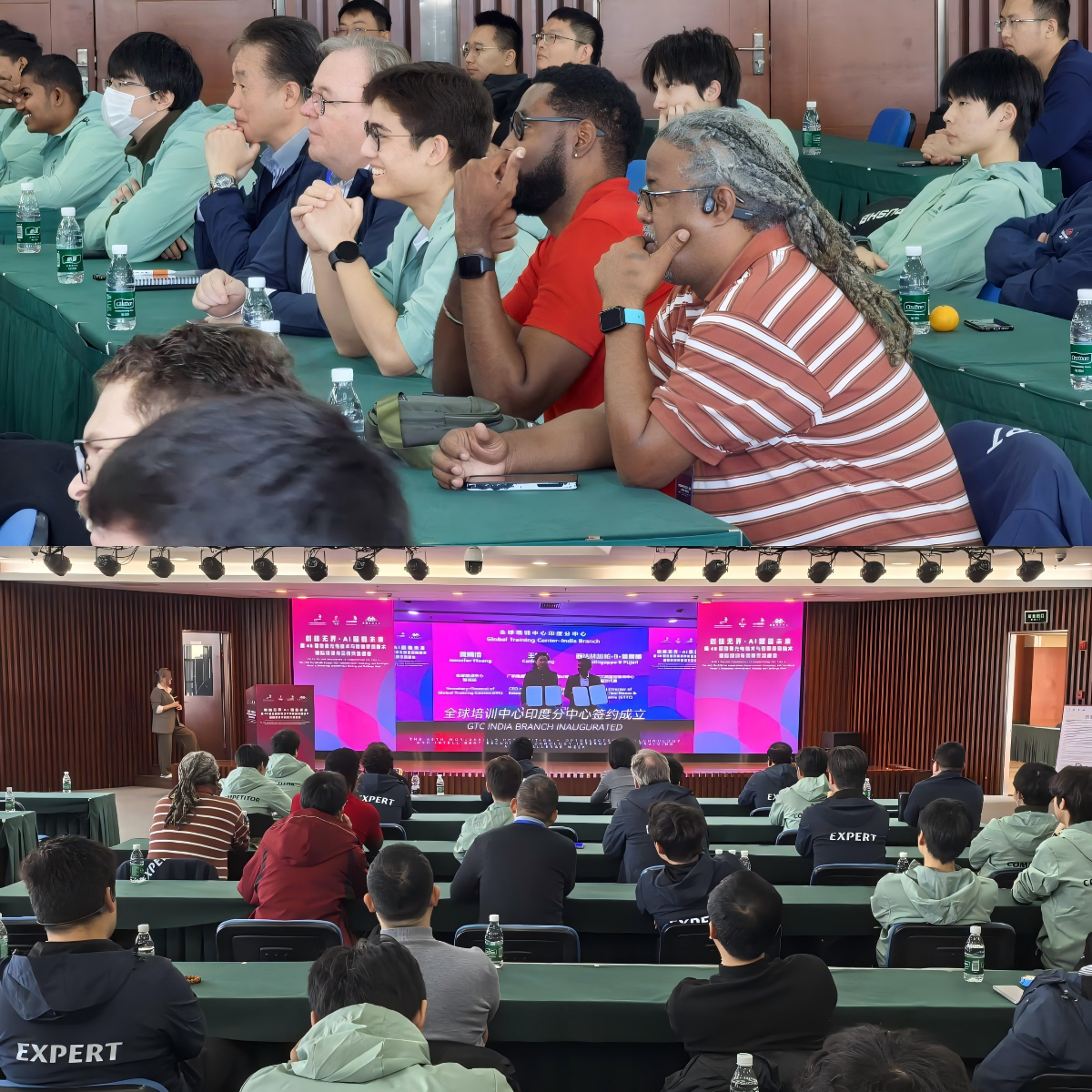
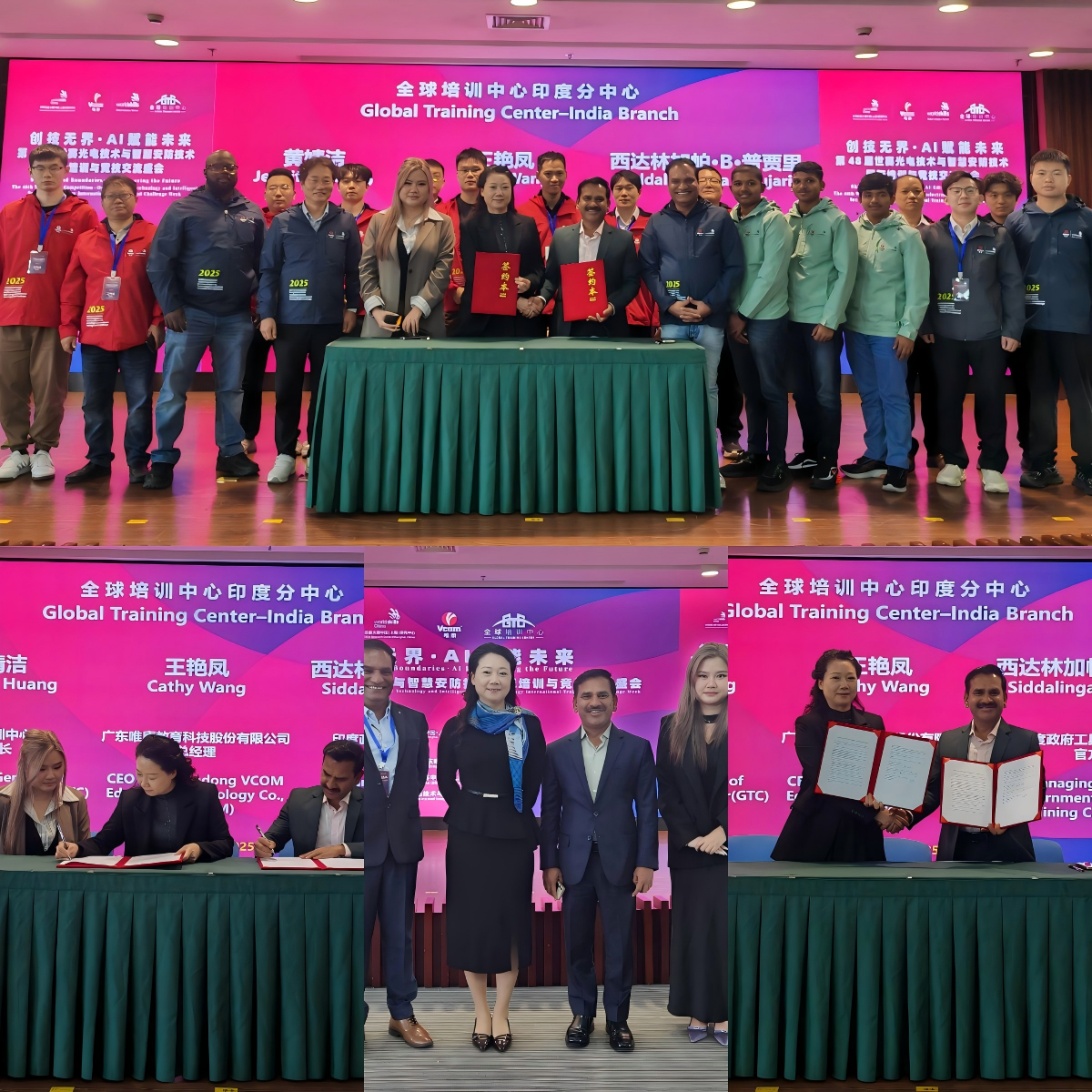
Within this shared standards framework, international cooperation mechanisms were advanced in parallel. During the event, the Global Training Center (GTC), Guangdong VCOM Education Technology Co., Ltd., and India’s Government Tool Room & Training Centre (GTTC) signed a Letter of Intent to initiate the establishment of the GTC - India Branch. The cooperation focuses on key fields such as optoelectronic technology and intelligent security technology, covering applied training programs, joint curriculum development, technical standards alignment, and WorldSkills competition preparation. This collaboration marks a shift from short-term exchanges toward systematic co-construction of global skills resources, with continued expansion along Belt and Road partner regions.
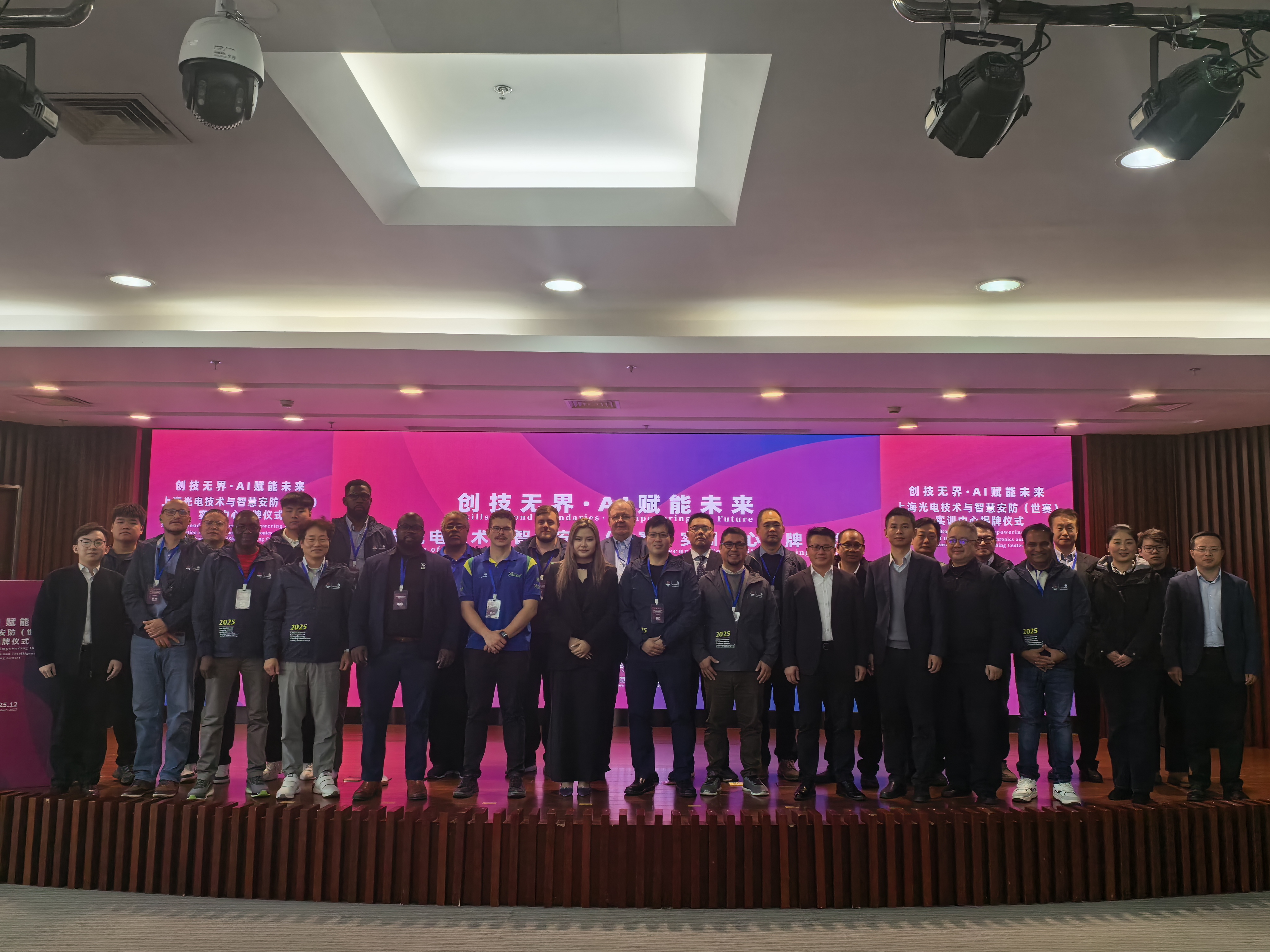
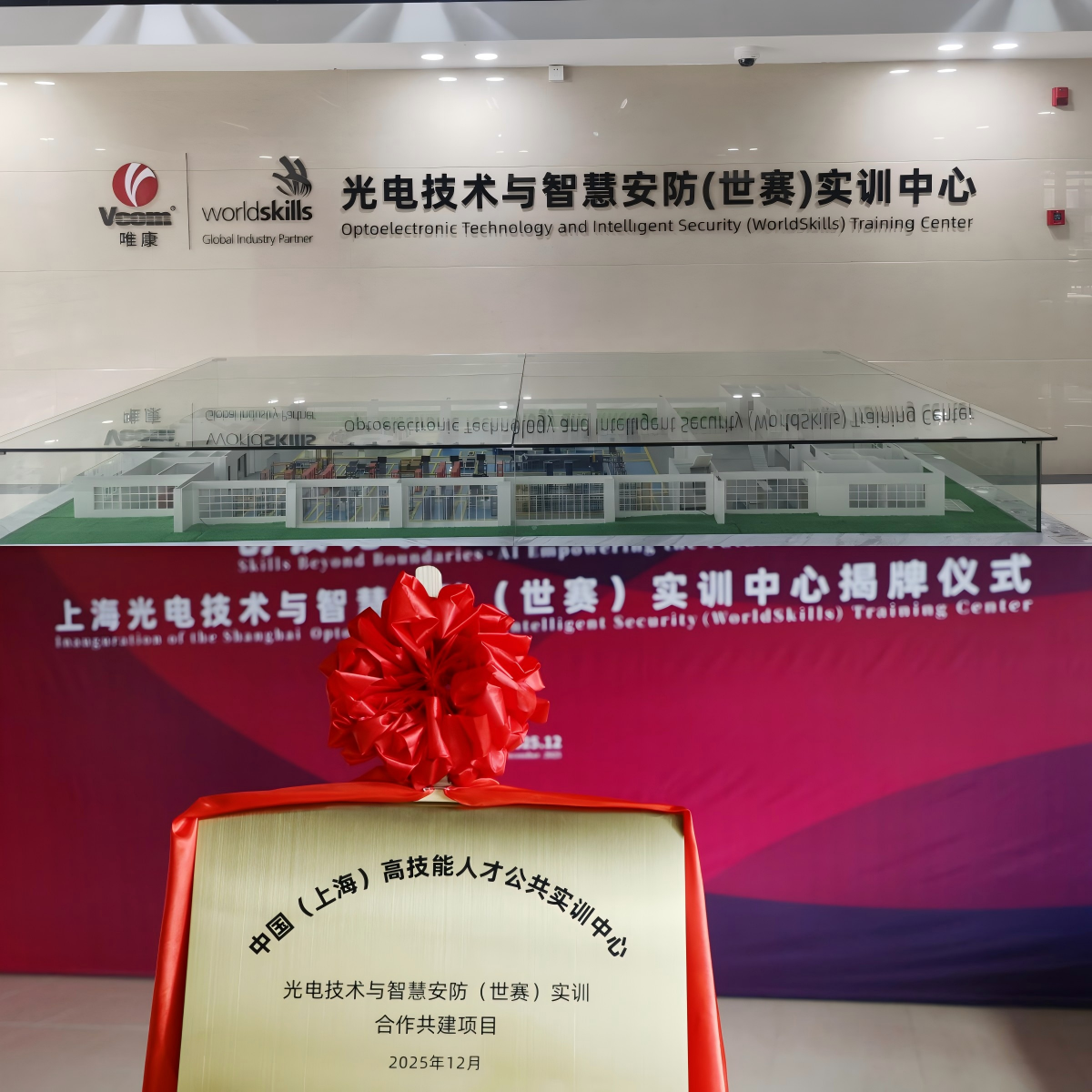
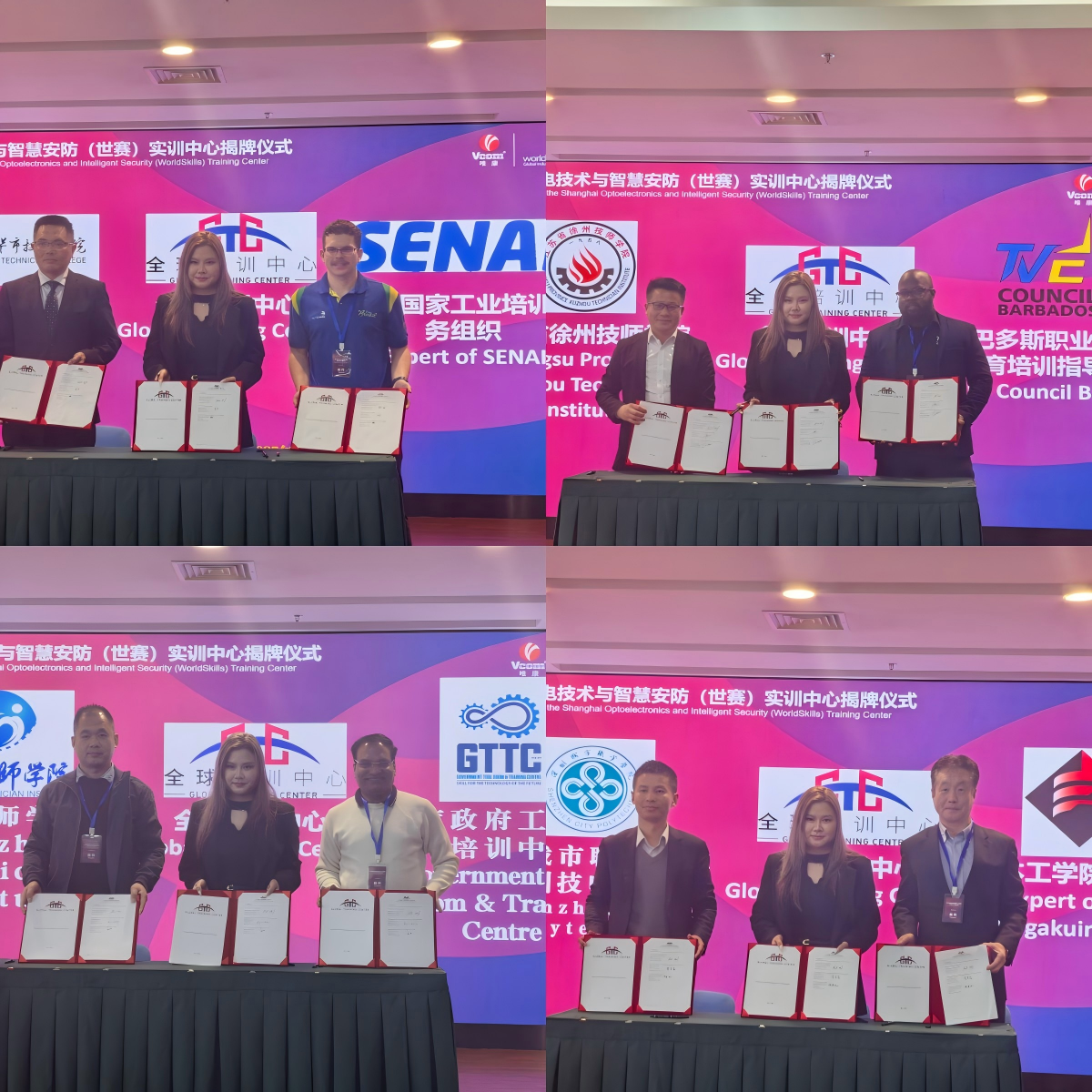
At the same time, the physical implementation of WorldSkills standards became a major pillar of the event. The Optoelectronic Technology and Intelligent Security (WorldSkills) Training Center, jointly established by the Shanghai Employment Promotion Center and VCOM, was officially inaugurated and began operation as the Global Training Center - Shanghai Branch. Built in full alignment with WorldSkills technical and equipment standards, the center comprises five major training areas: Optoelectronic Technology, Intelligent Security Technology, ICT Network Infrastructure (Information Network Cabling), Health and Social Care, and Electronics. It serves not only high-level competitor training and trainer development, but also broader social training and skills qualification programs, functioning as an integrated platform connecting international standards, industrial demand, and skills talent development. During the inauguration ceremony, the GTC signed three-party cooperation intentions with organizations and institutions including SENAI (Brazil), GTTC (India), TVET Council Barbados, Nihon Kogakuin College (Japan), as well as several leading vocational institutions in China, laying a solid foundation for long-term international skills talent cultivation.
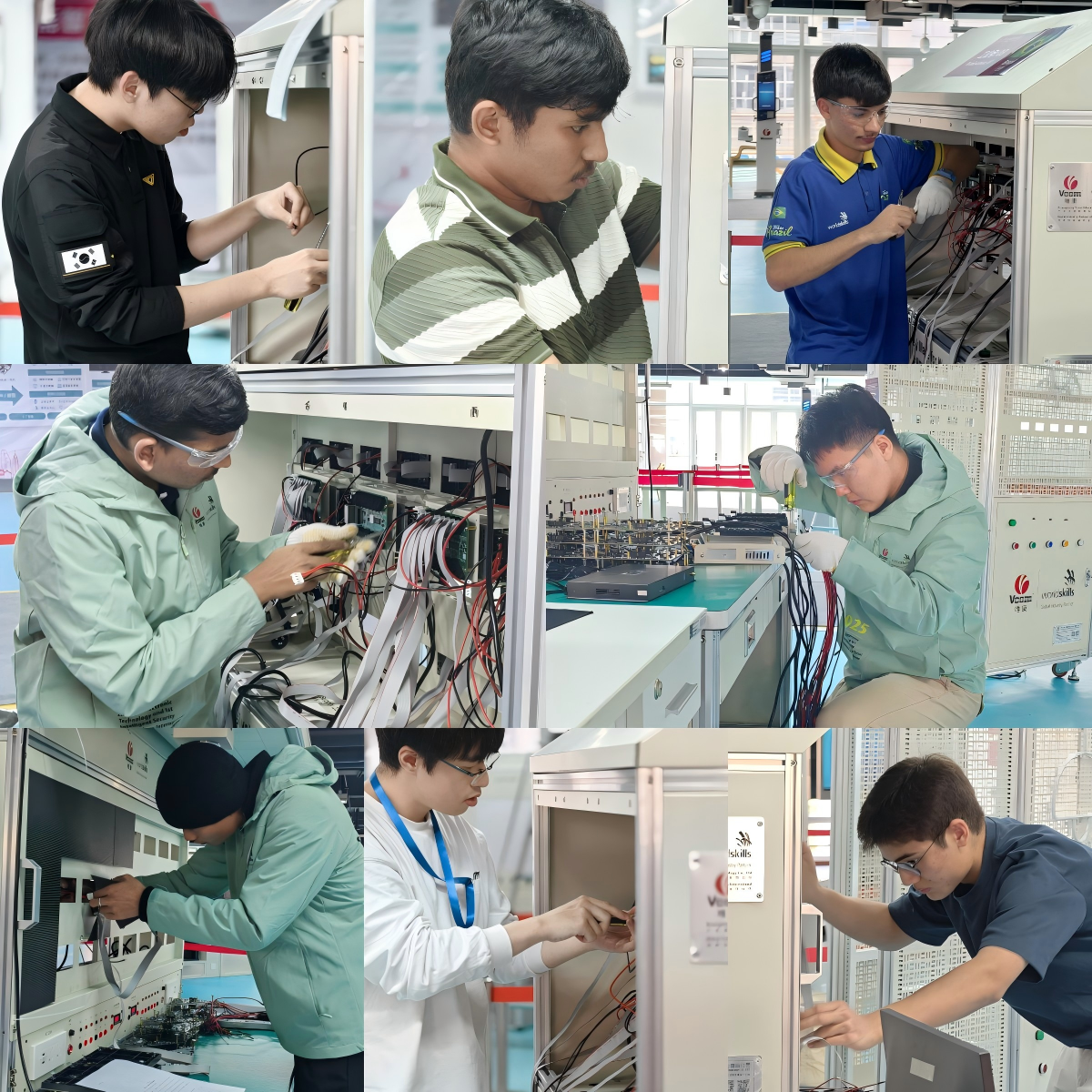
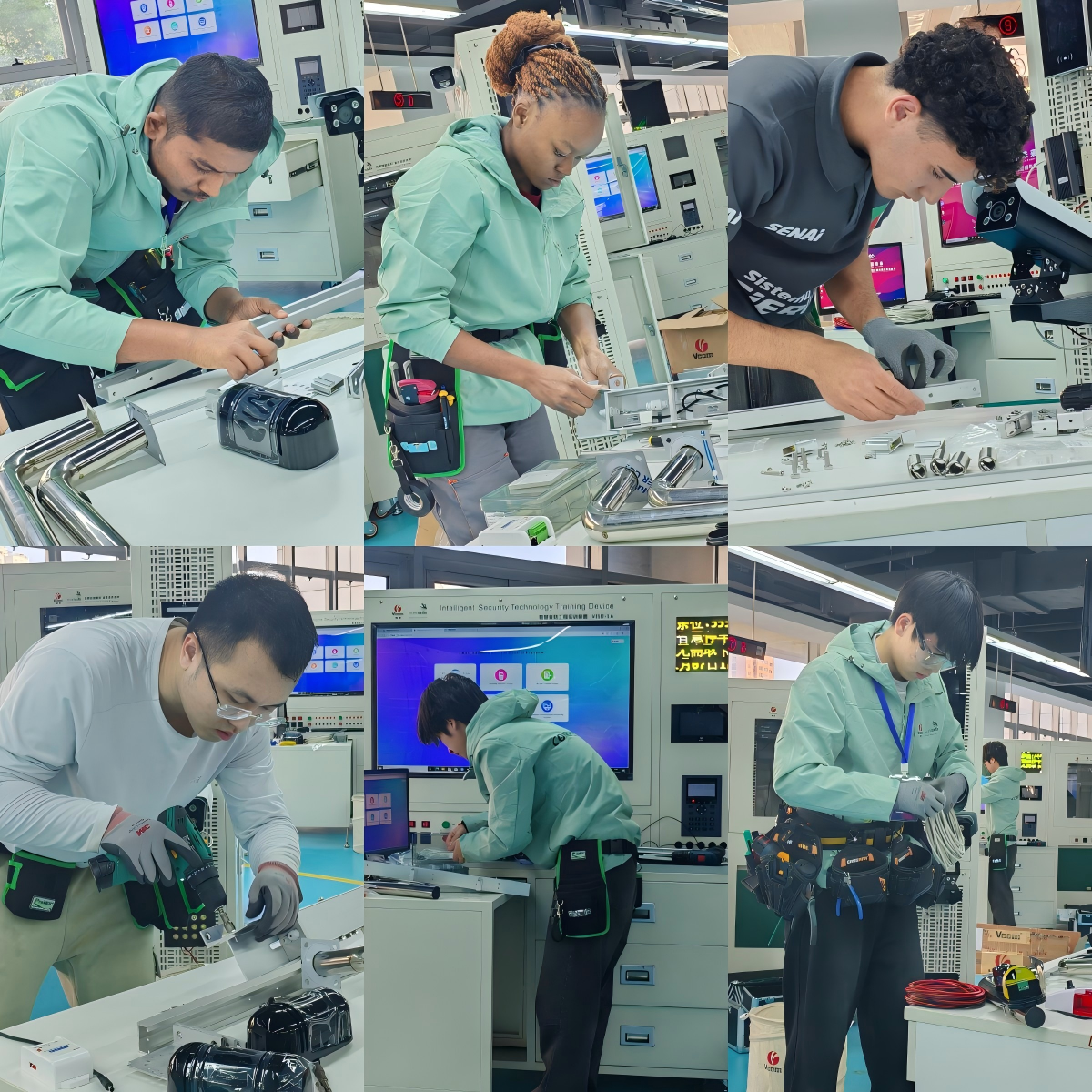
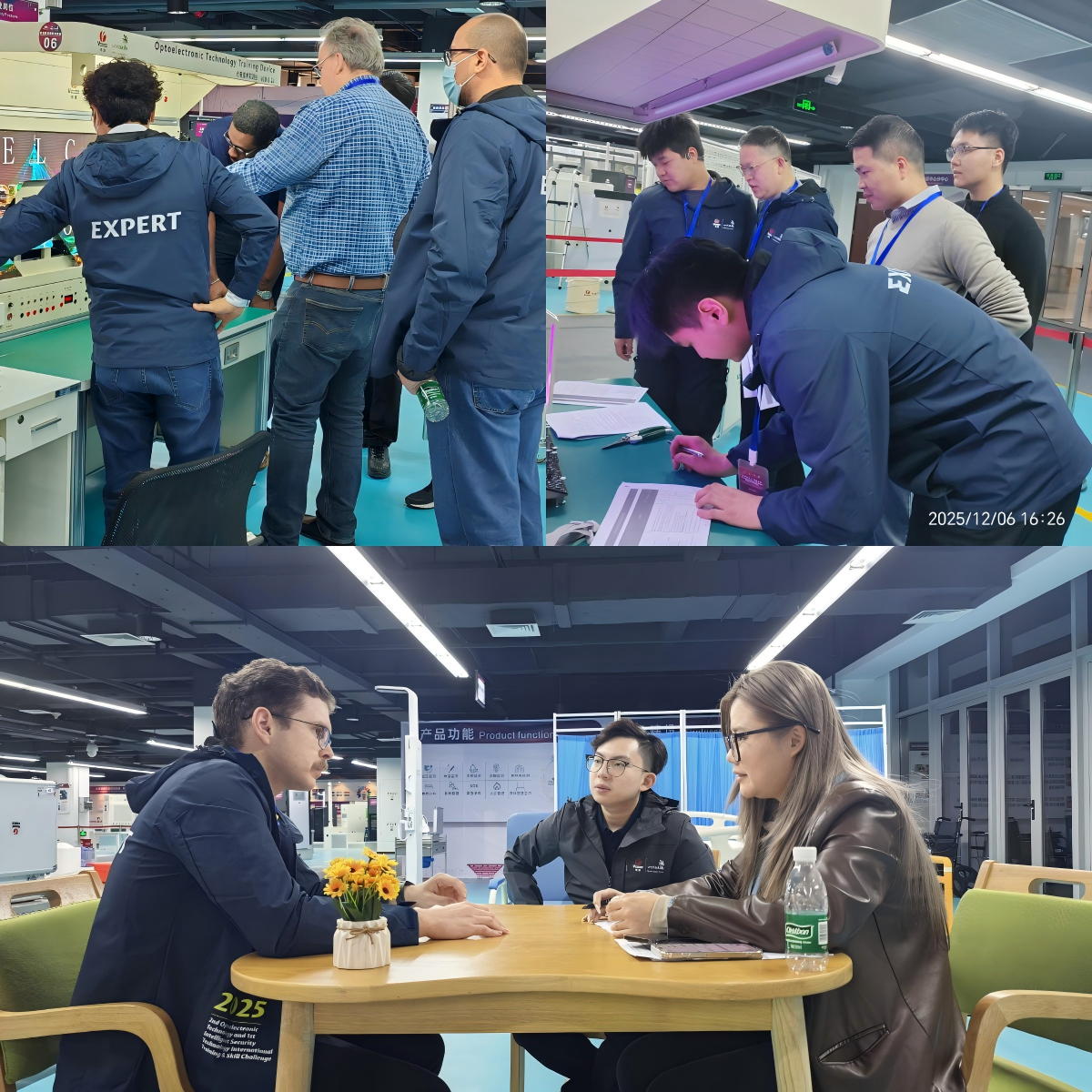
Supported by both unified standards and a shared training platform, the International friendly competition in Optoelectronic Technology and Intelligent Security Technology became a key component for evaluating the outcomes of the exchange. The friendly competition was conducted under WorldSkills Occupational Standards (WSOS), with cross-evaluation by Chinese and international experts. Competitors from China and other countries competed under the same rules framework. Beyond demonstrating technical competence, the competition served as a space for exchanging engineering methodologies and professional philosophies, providing young competitors with valuable international experience and a deeper understanding of WorldSkills standards.
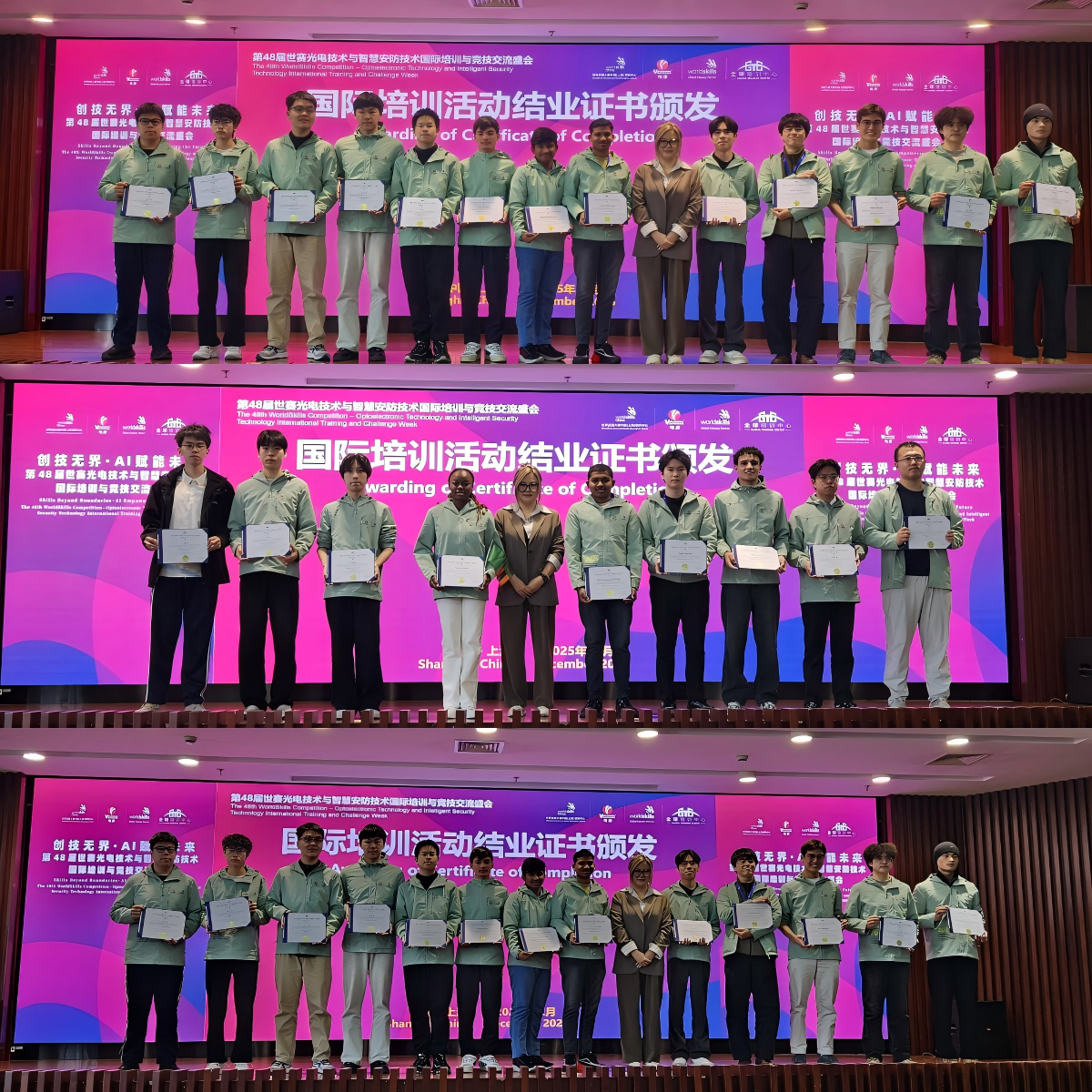
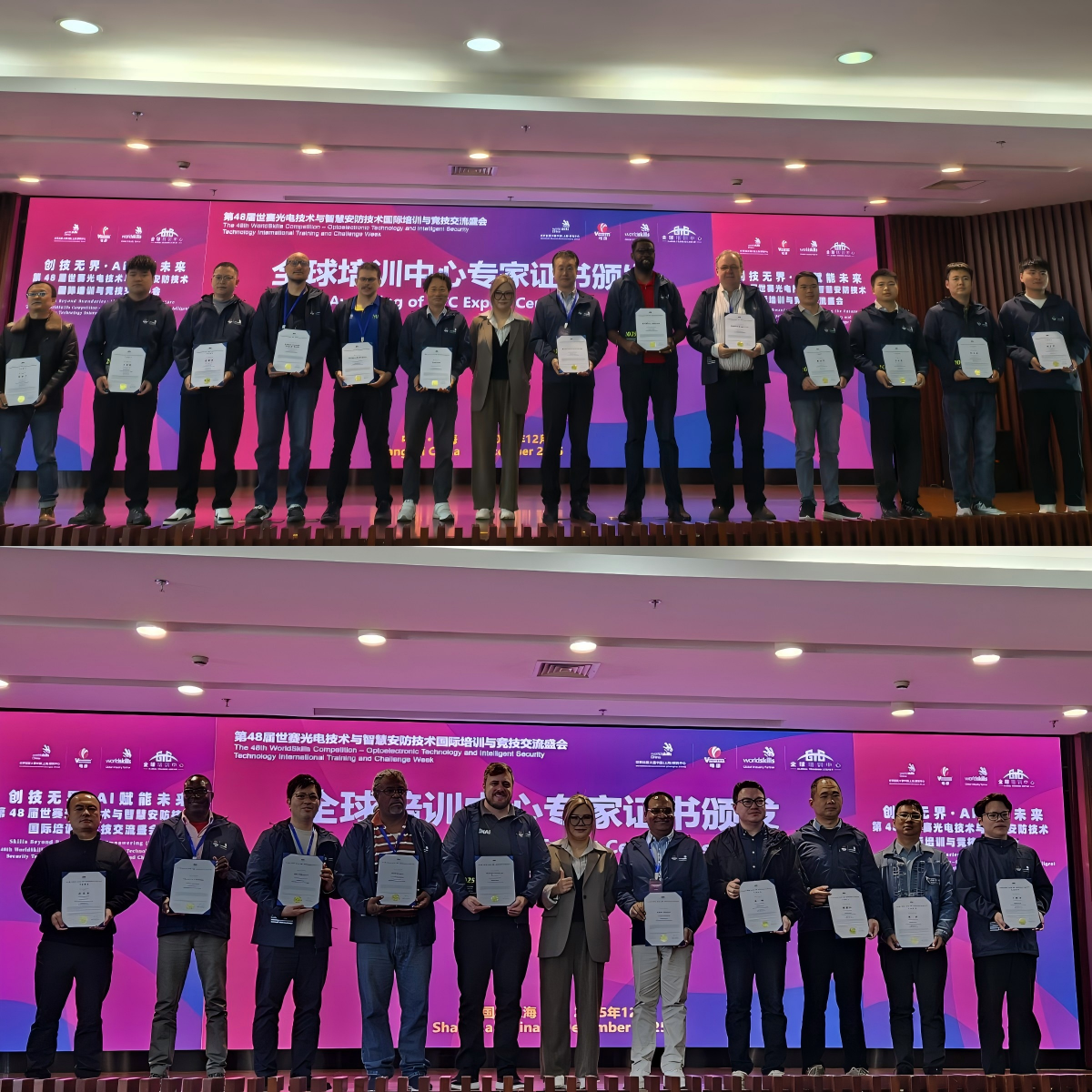
At the closing ceremony, experts and competitors from participating countries conducted a comprehensive review of the achievements and insights gained from the event. Ms. Jennifer Huang, Secretary-General of the GTC, presented certificates and medals to outstanding experts and participants. Building on the successful organization of a similar international exchange event in 2023, this edition further strengthened an international skills cooperation mechanism centered on WorldSkills standards, coordinated through the GTC, and supported by multi-country collaboration, laying a more solid foundation for the regular and systematic organization of future international training and challenge events.
By using skills as a common bond, this event not only built bridges across countries and disciplines, but also promoted the dissemination and practical transformation of WorldSkills standards. Skills know no borders, and innovation has no limits. As a Global Partner of WorldSkills, VCOM will continue to empower vocational education through emerging technologies such as artificial intelligence, the Internet of Things, and digital twins, driving the digital transformation of skills training, competition evaluation, resource sharing, and talent development. Looking ahead, VCOM will work closely with global partners to deepen international cooperation, leveraging technological innovation to upgrade skills development systems and enabling skills to become a core force driving global industrial upgrading and shared development, while continuously contributing new momentum to an open, inclusive, and sustainable global skills ecosystem.